

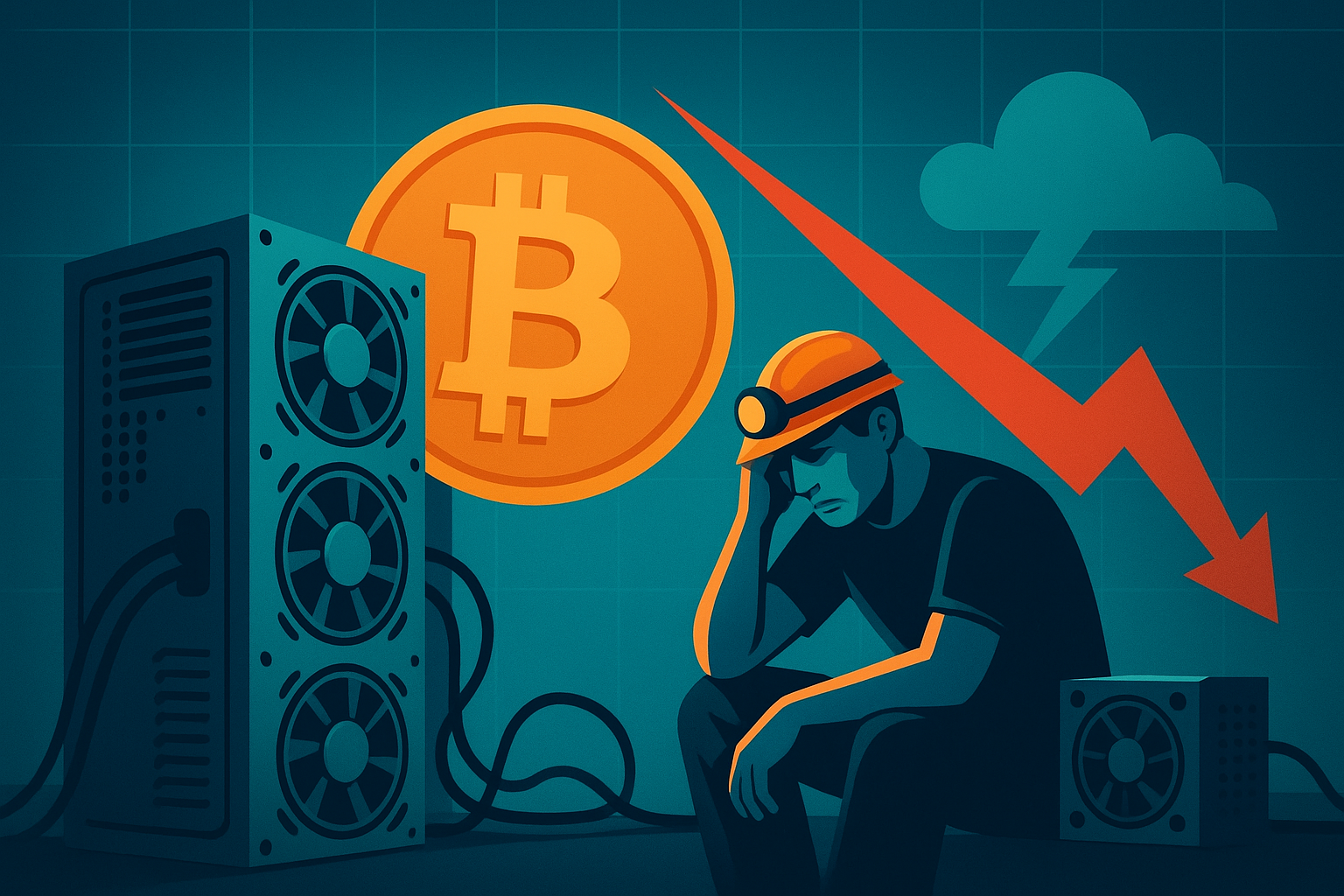
The declining hashprice is putting pressure on small miners and reshaping the mining industry.
The key profitability indicator for Bitcoin mining — the hashprice — has fallen to levels that make operations unprofitable for many smaller miners. This decline raises questions about the overall stability of the sector.
Currently, the metric, which reflects the expected daily revenue per unit of computational power, is around $42 per petahash per second (PH/s). This figure has steadily dropped from over $62 in July.
As hashprice approaches $40, less profitable mining operations are considering temporarily shutting down their equipment, according to TheMinerMag.
The decline is also impacting hardware manufacturers, who face reduced orders and losses on Bitcoin-denominated contracts due to the cryptocurrency’s price slump following October’s market crash.
To counter reduced demand for mining rigs, some companies, including Bitdeer, are shifting to self-mining operations.
Low operational profitability, rising electricity costs, and the expense of upgrading hardware are pushing market participants to explore new revenue streams. Many are pivoting toward AI and high-performance computing to maintain earnings amid increasing competition.
Miners Move Toward AI as Hashrate Climbs
After each Bitcoin halving, block rewards are cut in half while the demand for computational power continues to grow.
The Bitcoin hashrate recently surpassed 1 ZH/s, reflecting continued network growth.
Back in 2009, the block reward was 50 BTC, and mining could be done on ordinary CPUs. After the April 2024 halving, the reward dropped to 3.125 BTC, making mining feasible only with specialized ASIC devices due to growing network difficulty.
Faced with declining mining profits, companies are turning to alternative operations. Data centers and AI-computing services have become significant revenue sources.
For instance, in October, Cipher Mining signed a $5.5 billion, 15-year contract with Amazon to provide AWS computing power, and in November, IREN inked a similar $9.7 billion deal with Microsoft.
