



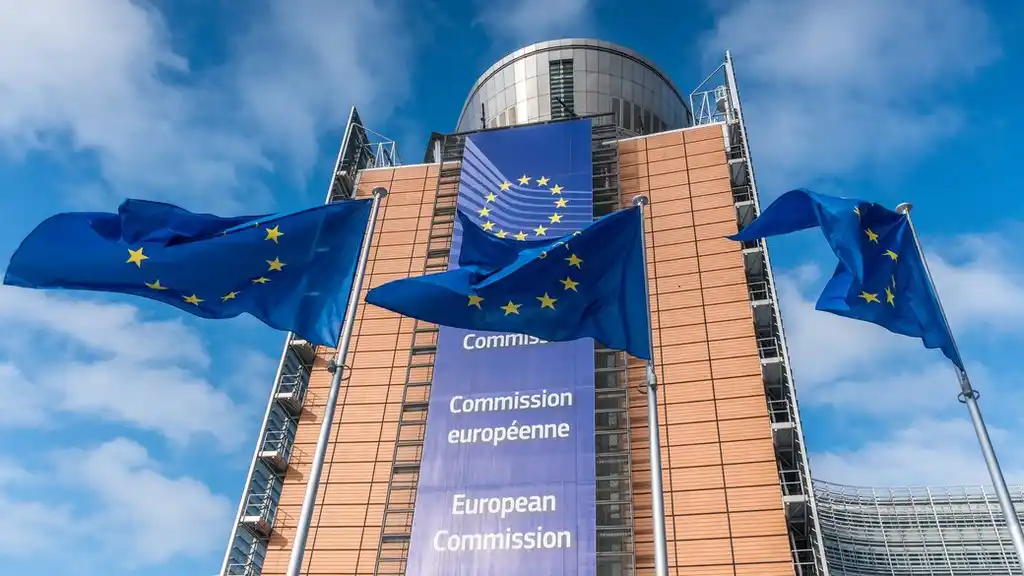
The European Commission is preparing a proposal to create a centralized financial regulator—essentially a European version of the U.S. SEC—to oversee both traditional stock and crypto markets. According to The Financial Times, the legislative package is expected to be unveiled in December 2025.
The initiative, known as the “Markets Integration Package,” aims to unify financial supervision across the European Union. It would transfer oversight of securities exchanges, crypto platforms, clearinghouses, and depositories to the European Securities and Markets Authority (ESMA). The reform seeks to eliminate market fragmentation and boost the EU’s competitiveness with the United States.
Why the EU Wants a Centralized Regulator
Currently, Europe’s financial ecosystem is fragmented—comprised of dozens of national regulators and hundreds of trading and post-trading venues. The Commission argues that this structure increases cross-border transaction costs and hampers innovation, especially for startups seeking capital across member states.
ECB President Christine Lagarde and former Italian Prime Minister Mario Draghi have both called for completing the Capital Markets Union, emphasizing the need for stronger EU-level supervision.
Under the proposed framework, ESMA would gain authority over:
- Stock exchanges and trading venues
- Crypto service providers
- Central counterparties (CCPs)
- Central securities depositories (CSDs)
It would also serve as the final arbiter in disputes between major asset managers and national regulators.
Diverging Views Among Member States
While France, Italy, and Germany support the move toward centralization, Luxembourg and Ireland have voiced strong opposition. Smaller financial hubs fear that shifting power to ESMA could undermine their domestic regulatory influence and harm local financial centers.
“We favor aligning supervisory practices, not building an expensive and inefficient centralized model,” said Luxembourg’s Finance Minister Gilles Roth.
European exchanges have also expressed concern, arguing that national regulators already maintain effective cooperation and that additional oversight could lead to higher compliance costs.
“Expanding ESMA’s mandate would inevitably raise industry fees,” warned Marin Kapell, a policy advisor at the European Fund and Asset Management Association (EFAMA).
Germany’s Changing Position
Interestingly, Germany, which had long resisted financial supervision centralization, appears open to compromise. Chancellor Friedrich Merz’s government is reportedly discussing joint proposals with France, which has consistently backed the idea of a single European regulator.
Sources cited by FT suggest Germany might agree to give ESMA partial oversight of the asset management sector, though it remains reluctant to transfer direct supervision of crypto exchanges.
The Bigger Picture
In April 2025, ESMA’s Executive Director Natasha Cazenave warned that the growing interconnection between crypto markets and traditional finance could pose risks to the EU’s financial stability.
In October, the Bank of France reiterated the call to place major crypto firms under ESMA’s authority, arguing that unified supervision would ensure consistent regulatory standards across the bloc.
With the legislative package due in December, the debate over Europe’s financial sovereignty—and the balance between efficiency and national autonomy—has entered a crucial phase.
If adopted, the reform could mark the most significant step toward a unified European financial market since the introduction of the euro.