




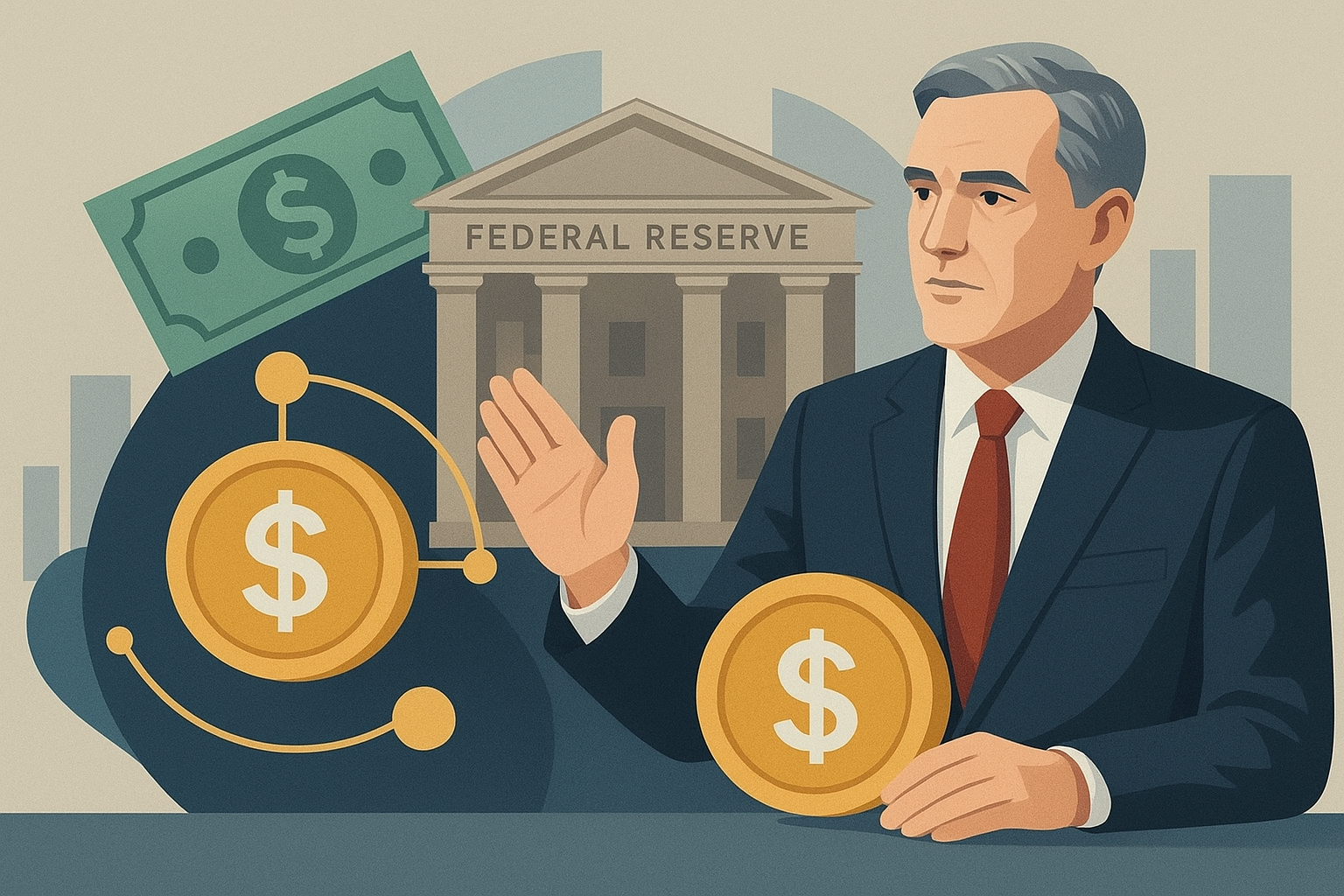
Federal Reserve Board member Steven Miran has cautioned that the rapid expansion of the stablecoin market could significantly affect demand for U.S. dollar assets and alter the landscape of monetary policy.
Speaking at the BCVC Summit 2025 in New York, Miran highlighted that the volume of dollar-backed stablecoins could reach $3 trillion by the end of the decade, potentially surpassing several segments of the U.S. debt market.
He emphasized that stablecoins are becoming an increasingly important tool for global dollar circulation, especially in countries with limited access to traditional banking infrastructure. According to Miran, this trend strengthens the international role of the U.S. dollar, while at the same time complicating the Fed’s efforts to manage liquidity and interest rates.
“If a global surplus of stablecoins is driven by conversions from other currencies into the dollar, it will reinforce the dollar’s strength but introduce new challenges for monetary policy,” Miran noted.
The Fed, he said, will take this dynamic into account when shaping its future rate and liquidity decisions.
Miran also downplayed fears that stablecoins could trigger large-scale deposit outflows from U.S. banks, arguing that most of the demand comes from outside the United States. He stressed that the newly adopted GENIUS Act, aimed at regulating stablecoins, does not allow interest-bearing features, making them less competitive than bank deposits.
Despite the potential risks, Miran acknowledged the positive role stablecoins could play in modernizing the U.S. financial infrastructure. He pointed out that dollar-backed tokens can improve the speed, transparency, and efficiency of payment systems across the financial sector.
Steven Miran, appointed to the Fed Board by President Donald Trump in 2025, previously served as an economic adviser in the administration and worked in the private financial sector.
Earlier this month, the Federal Reserve cut interest rates by 0.25% on October 30, 2025, signaling a continued focus on stabilizing inflation and growth.