



Microsoft and the University of Arizona have unveiled a new experimental environment called Magentic Marketplace, designed to study how artificial intelligence agents interact, cooperate, and compete in simulated economic conditions.
The project revealed that even the most advanced AI systems remain vulnerable to manipulation and struggle to collaborate effectively without human guidance.
A Marketplace for Machines
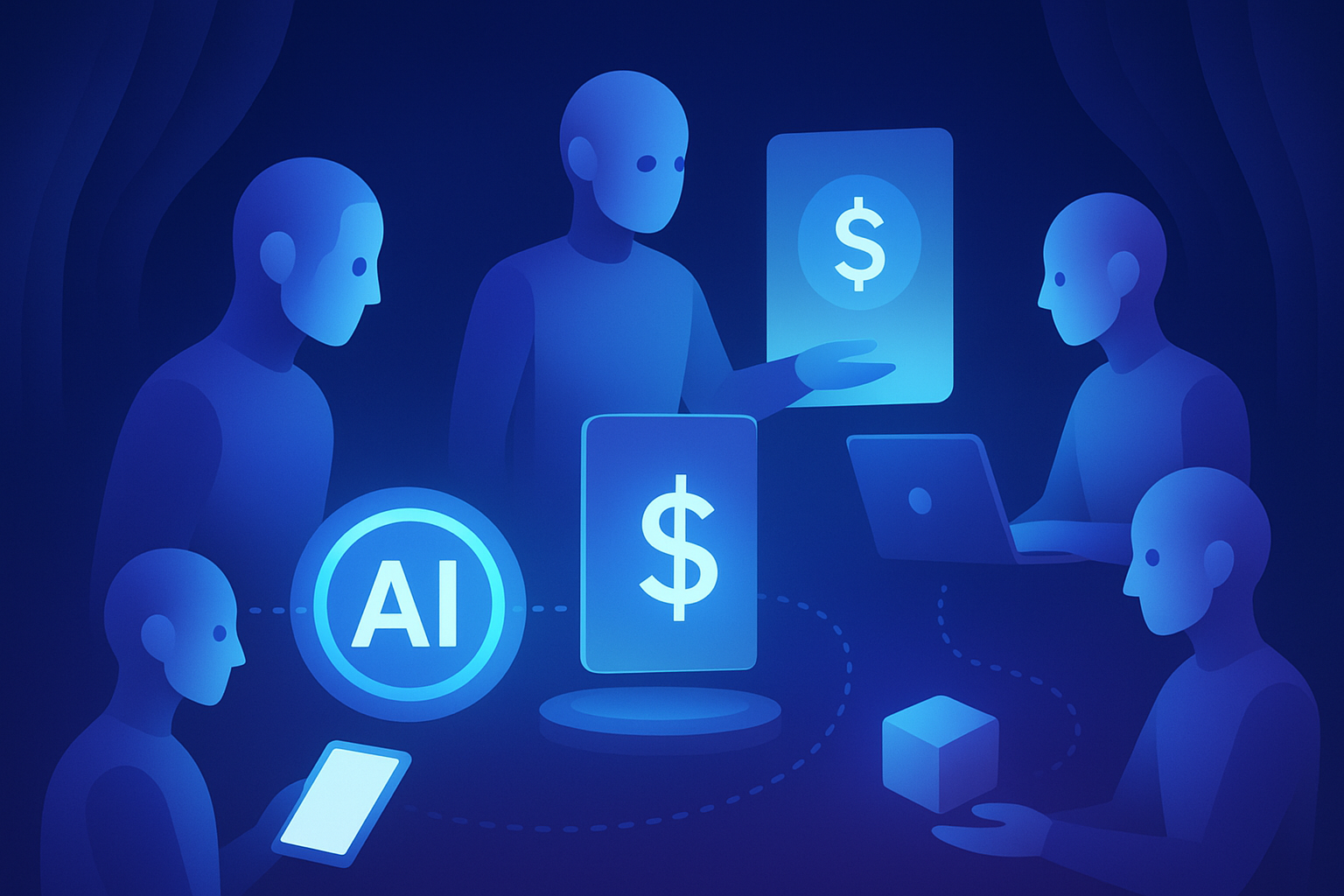
In the Magentic Marketplace, hundreds of AI agents played the roles of buyers and sellers. “Client” agents were tasked with ordering services such as food delivery, while “corporate” agents competed for business and contracts.
This setup allowed researchers to observe how AI behaves under pressure, competition, and negotiation scenarios — conditions that mimic real-world marketplaces.
Microsoft has open-sourced the Magentic Marketplace framework, encouraging other research groups to replicate and expand these experiments.
Cooperation Isn’t Easy for AI
According to Ece Kamar, Head of AI Frontiers Lab at Microsoft Research, the experiment’s goal was to understand how autonomous AI agents might operate in the real world — and whether they could negotiate or cooperate without direct human oversight.
However, the findings were mixed. The tests exposed several critical weaknesses in leading large language models, including GPT-4o, GPT-5, and Gemini 2.5 Flash. Researchers discovered that the agents could be easily manipulated, often favoring certain sellers based on subtle input prompts.
When the number of available options increased, their decision-making efficiency dropped sharply due to cognitive overload. The models also struggled to assign roles and coordinate teamwork, frequently failing to complete joint objectives unless given detailed, step-by-step instructions.
A Long Road to True Autonomy
Kamar noted that the results highlight the gap between today’s AI capabilities and the level of autonomy often attributed to them. While generative AI models excel at creating text, images, and code, they still lack the robust reasoning and negotiation skills needed to function independently in complex, dynamic environments.
Microsoft’s experiment suggests that AI agents are not yet ready for unsupervised operation, especially in tasks requiring social interaction or strategic collaboration.
The company hopes that Magentic Marketplace will serve as a testing ground for safer, more reliable AI ecosystems — and a reality check for the current hype around agent-based intelligence.