


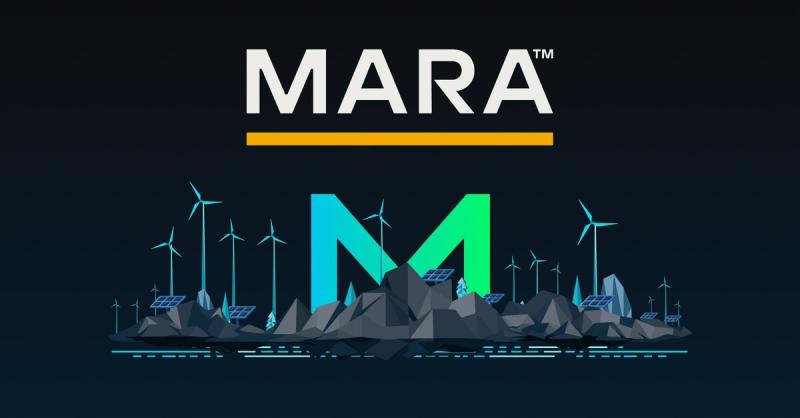
Fred Thiel, CEO of MARA Holdings (MARA), has outlined the company’s strategy for navigating the next phase of Bitcoin mining as the 2028 halving approaches. According to Thiel, the mining landscape will favor only those operators who control their energy sources or pivot to artificial intelligence (AI) and high-performance computing (HPC) to optimize operations.
Thiel emphasized that the Bitcoin mining industry is entering its most challenging period in years. “Bitcoin mining is a zero-sum game. As more players increase capacity, margins shrink, and energy costs become the limiting factor,” he said in an interview with CoinDesk.
He described the market as “mature and more competitive,” noting that miners without access to affordable and stable energy, or without diversified operations, face serious risks. The consolidation trend is evident, with equipment manufacturers now operating mining facilities themselves, as demand from external customers declines. Rising global hash rates further compress profitability for all other participants.
With increasing competition, major players are exploring new avenues, including AI-driven solutions or HPC integration. Others are building their own energy production capacity to reduce operational costs. Thiel explained, “Our strategy is to remain in the lowest quartile for production costs. In a tough market, 75% of competitors are likely to exit before us.”
The 2028 halving will reduce Bitcoin block rewards to slightly more than 1.5 BTC, potentially rendering traditional mining models unprofitable under current conditions. Thiel highlighted that transaction fees were intended to gradually replace block subsidies, but this transition has not occurred. Without significant Bitcoin price growth—potentially 50% or more annually—the economics of mining will become increasingly difficult post-2028, and even more challenging by 2032.
Thiel also mentioned possible future solutions, such as banks pre-reserving block space for priority transactions, though such initiatives are not yet implemented. “By 2028, you either generate your own energy, partner with a provider, or rely on someone who does. The days of simple network-connected miners are numbered,” he stressed.
Earlier this November, MARA reported a record quarterly revenue of $252.4 million, up 92% year-over-year, with net profit reaching $123 million, compared to a loss the previous year. The company is actively integrating AI into mining operations, deploying its first AI servers in Greenbrier, Texas, and partnering with MPLX LP, a subsidiary of Marathon Petroleum Corporation. Another key step was acquiring a controlling stake in Exaion, a French subsidiary of EDF and a major clean energy producer.
Thiel has previously emphasized that early investments in AI infrastructure deliver measurable operational advantages, reinforcing MARA’s strategy to combine AI, HPC, and energy independence in preparation for the next halving.